
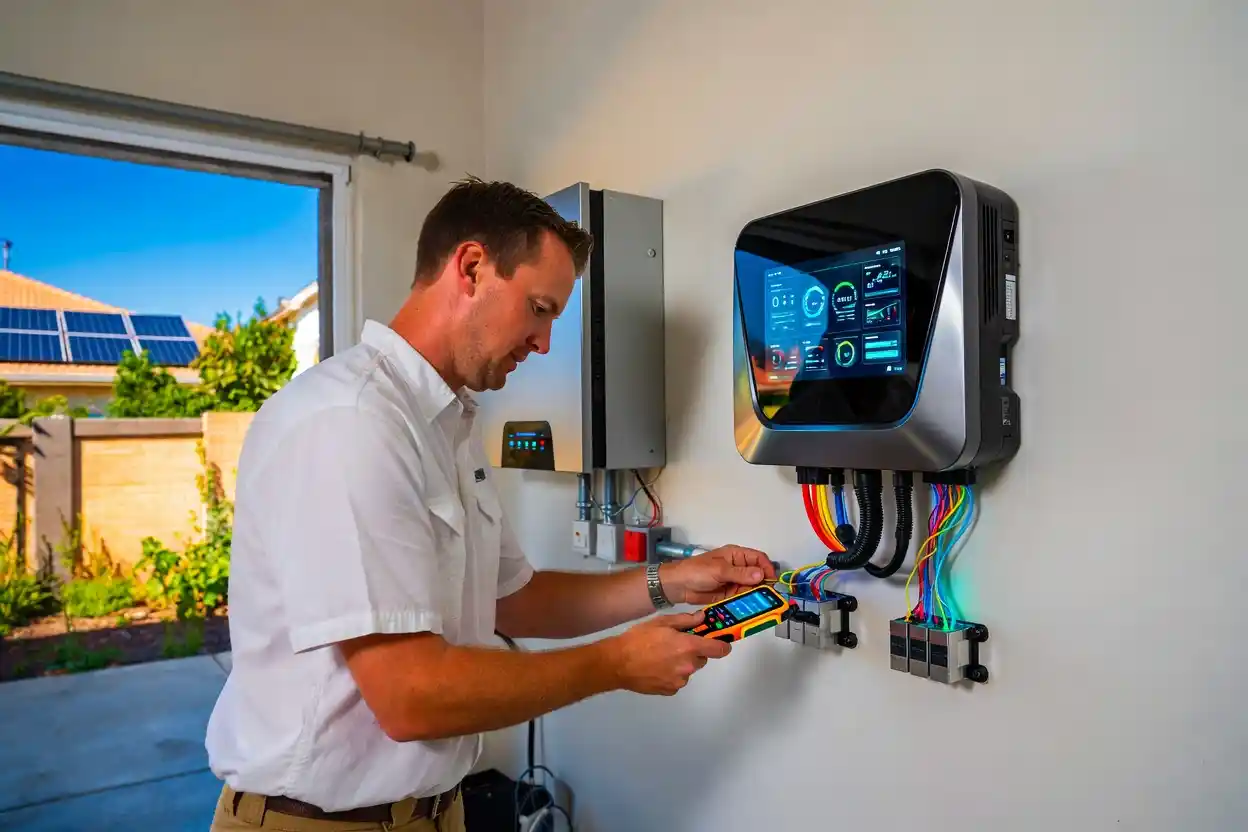
Panel brand gets most of a homeowner's attention, but the inverter — the component that converts your panels' DC output into usable AC power, and manages battery charging in a hybrid system — arguably does more to determine your day-to-day experience with solar. Understanding why an installer recommends a particular inverter is worth as much scrutiny as panel comparison.
What the Inverter Actually Controls
Beyond basic DC-to-AC conversion, a hybrid inverter manages how your system prioritises solar generation, battery charging, and grid draw throughout the day — decisions that directly affect self-consumption efficiency and how well the system performs during load shedding. Two systems with identical panels and battery capacity can perform noticeably differently based purely on inverter software and configuration quality.
Why Local Support Matters More Than It Might Seem
Inverters are more likely than panels to need firmware updates, configuration adjustments, or warranty service over the system's life. A brand with limited local support presence in South Africa can mean longer wait times for troubleshooting or parts, regardless of how good the hardware itself is on paper. Asking an installer specifically about local support and service turnaround for the inverter brand they're proposing is a reasonable, practical question — arguably more relevant day-to-day than headline efficiency specs.
Common Reasons Installers Favour a Particular Brand
Installers often standardise around a small number of inverter brands they're deeply familiar with, trained on, and can service confidently — which is a legitimate reason to trust a recommendation, not necessarily a red flag. It's still worth asking directly: is this recommendation based on genuine product fit for my situation, or purely on what this company is used to installing? A confident, specific answer either way is a good sign; a vague one is worth following up on.
Compatibility With Load Shedding-Specific Features
Given South Africa's load shedding reality, features like fast, seamless switchover to battery power during an outage (rather than a noticeable delay or full reboot) are particularly relevant locally in a way that international reviews and specs sheets, often written for markets without this consideration, may not emphasise. Ask specifically how a proposed inverter handles grid-outage switchover, since this varies meaningfully between models even within the same general category.
Questions Worth Asking About Any Proposed Inverter
- What's the local support and warranty service turnaround for this specific brand?
- How does it handle switchover during a grid outage — how fast, and how seamless?
- Is it compatible with future expansion (adding panels or battery capacity later) without full replacement?
- Does it offer app or web-based monitoring you'll have direct access to, not just the installer?
Not Chasing the "Best" Brand in Isolation
There's rarely a single objectively "best" inverter brand — the right choice depends on your system size, budget, priority (backup vs. bill savings), and the installer's genuine expertise with a given brand. A well-installed, well-configured mid-tier inverter from a brand the installer knows thoroughly often outperforms a premium brand installed by someone unfamiliar with its specific configuration quirks.
Getting Started
Our solar calculator gives a starting system size estimate independent of any specific brand — a useful baseline before brand-specific conversations with installers. Compare installers on ADEO and ask each one directly about their inverter recommendation and reasoning.
Frequently Asked Questions
Does a more expensive inverter always mean better performance? Not necessarily — price often reflects features (monitoring sophistication, expansion capacity, brand reputation) that may or may not matter for your specific situation, rather than a direct, linear performance difference.
Can I request a specific inverter brand if my installer usually uses a different one? Often yes, though it's worth asking whether they're genuinely experienced installing and configuring that specific brand — unfamiliarity can undermine the benefit of choosing a "better" brand on paper.
How long do inverters typically last compared to panels? Inverters generally have a shorter expected lifespan than panels and are more likely to need replacement or major servicing within the system's overall life — worth factoring into long-term cost expectations.

Writes about solar and renewable energy for South African homes and businesses at SolarTally, and cross-checks every guide against current tariffs and installer standards.


Popular on SolarTally