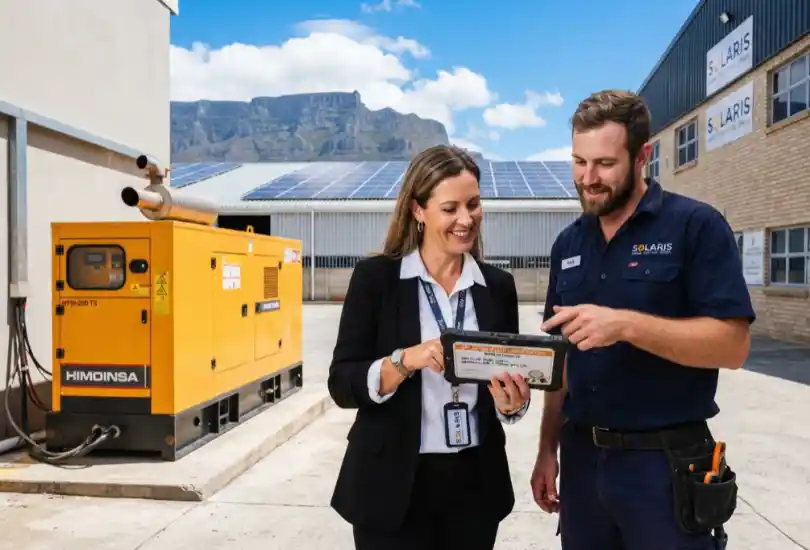

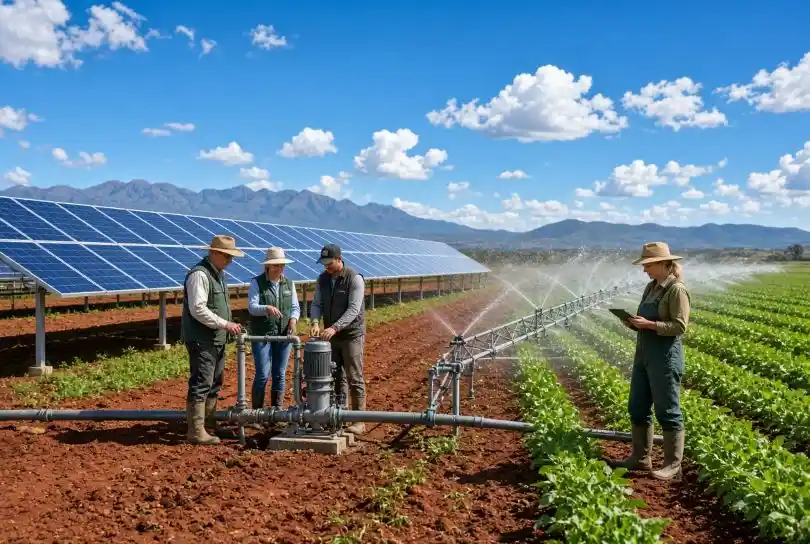
Agricultural solar in South Africa looks fundamentally different from a home or standard commercial installation — the load profile, the priorities, and even the physical siting options are shaped by farming operations in ways generic solar advice doesn't account for.
Irrigation as the Dominant Load
For many farming operations, irrigation pumping is the single largest and most predictable electricity draw — and critically, it's often flexible in timing, since irrigation can frequently be scheduled to run during daylight hours specifically to align with solar generation. This flexibility is a genuine advantage over load types that can't be shifted, and it's worth designing the system explicitly around this scheduling opportunity rather than treating irrigation load the same as a fixed daily draw.
Remote and Off-Grid Considerations
Some agricultural properties, particularly larger or more remote operations, may have sections genuinely disconnected from reliable grid infrastructure — pump stations or outbuildings far from the main connection point. For these specific situations, a small standalone or mini-grid solar setup can make more sense than extending grid infrastructure, a genuinely different calculation from the grid-tied hybrid systems most residential and commercial guides (including most of ours) assume.
Land Availability Changes the Mounting Conversation
Unlike urban commercial properties constrained to roof space, agricultural operations often have land available for ground-mounted arrays — opening up sizing and orientation flexibility that roof-constrained properties don't have, similar in principle to the carport/ground-mount considerations covered in our residential piece on carports vs roof-mounting, just at a larger scale.
Load Shedding's Direct Cost to Perishable Operations
For operations involving cold storage, dairy, or other perishable or livestock-dependent processes, an outage isn't just inconvenient — it can mean direct, significant loss. This dramatically strengthens the case for backup-capable battery storage specifically for these load types, beyond the general "nice to have" framing that applies to less time-critical operations.
Seasonal Load Variation Is More Pronounced
Agricultural electricity usage often varies considerably by season — heavy irrigation load during growing season, different patterns during harvest or dormant periods — a more pronounced version of the seasonal generation variability covered in our residential seasonal piece. A system sized purely on an annual average may not reflect the specific months where solar's contribution matters most.
Getting a Proper Agricultural Assessment
Given how different agricultural load profiles are from standard residential or commercial patterns, a generic sizing approach genuinely doesn't fit well here — a proper assessment needs to understand your specific irrigation schedule, cold storage or livestock-dependent loads, and any remote/off-grid sections separately.
Where to Start
Our solar calculator gives a rough starting estimate useful for initial budget conversations, though agricultural operations should expect a more involved, load-specific assessment than the calculator alone can provide. Compare installers with genuine agricultural experience on ADEO.
Frequently Asked Questions
Can irrigation pumps run directly off solar without battery storage? Often yes, if irrigation can be scheduled during daylight hours — this can reduce the need for expensive battery capacity specifically for this load.
Is off-grid solar realistic for a remote farm building? Often yes for smaller, specific loads (a remote pump station, an outbuilding) where extending grid infrastructure would be more expensive than a standalone solar setup — worth assessing case by case.
Does agricultural solar qualify for different incentives than residential or standard commercial? This varies and is worth confirming with your accountant or a tax advisor familiar with agricultural business structures specifically, similar to the general point made in our piece on tax incentives for business solar.

Writes about solar and renewable energy for South African homes and businesses at SolarTally, and cross-checks every guide against current tariffs and installer standards.


Popular on SolarTally